XGIMI Horizon 20 Max and R_VOLUTION PlayerPro 8K Setup
I tested the XGIMI Horizon 20 MAX with the R_VOLUTION PlayerPro 8K to see if uncompressed 4K Blu-ray remuxes beat streaming on a 120-inch screen.

Written by
Zino
Streaming services do not give you the full picture. When you spend good money on a massive 120-inch projection screen, watching a heavily compressed 15 Mbps stream from Netflix or Disney+ makes the image look flat, noisy, and starved of detail. Pairing the XGIMI Horizon 20 MAX projector with the R_VOLUTION PlayerPro 8K media player completely fixes that gap, giving you direct access to full-bitrate disc rips with proper frame rate matching and uncompressed object-based audio.
As I mentioned in my video, both are an insane product. Putting them together into a single living room system took some trial and error, particularly around routing high-bandwidth video and Dolby Atmos sound simultaneously. Here is what I learned after living with this hardware every single day.
Why local remux files destroy streaming on a massive screen
Most people assume a 4K stream on Netflix looks identical to a physical 4K disc. It does not. A full-quality 4K UHD Blu-ray remux typically sits between 50 GB and 80 GB per movie. When that same title streams over the internet, the provider compresses the file down to 25 GB or lower to save bandwidth on their servers.
As I put it during my testing, Netflix divides that by two, so you are not getting the exact correct picture quality. On a 55-inch television across the room, you might not spot macroblocking in shadows. On a 120-inch motorized screen, you see every single dropped bit, flattened color gradient, and compression artifact.
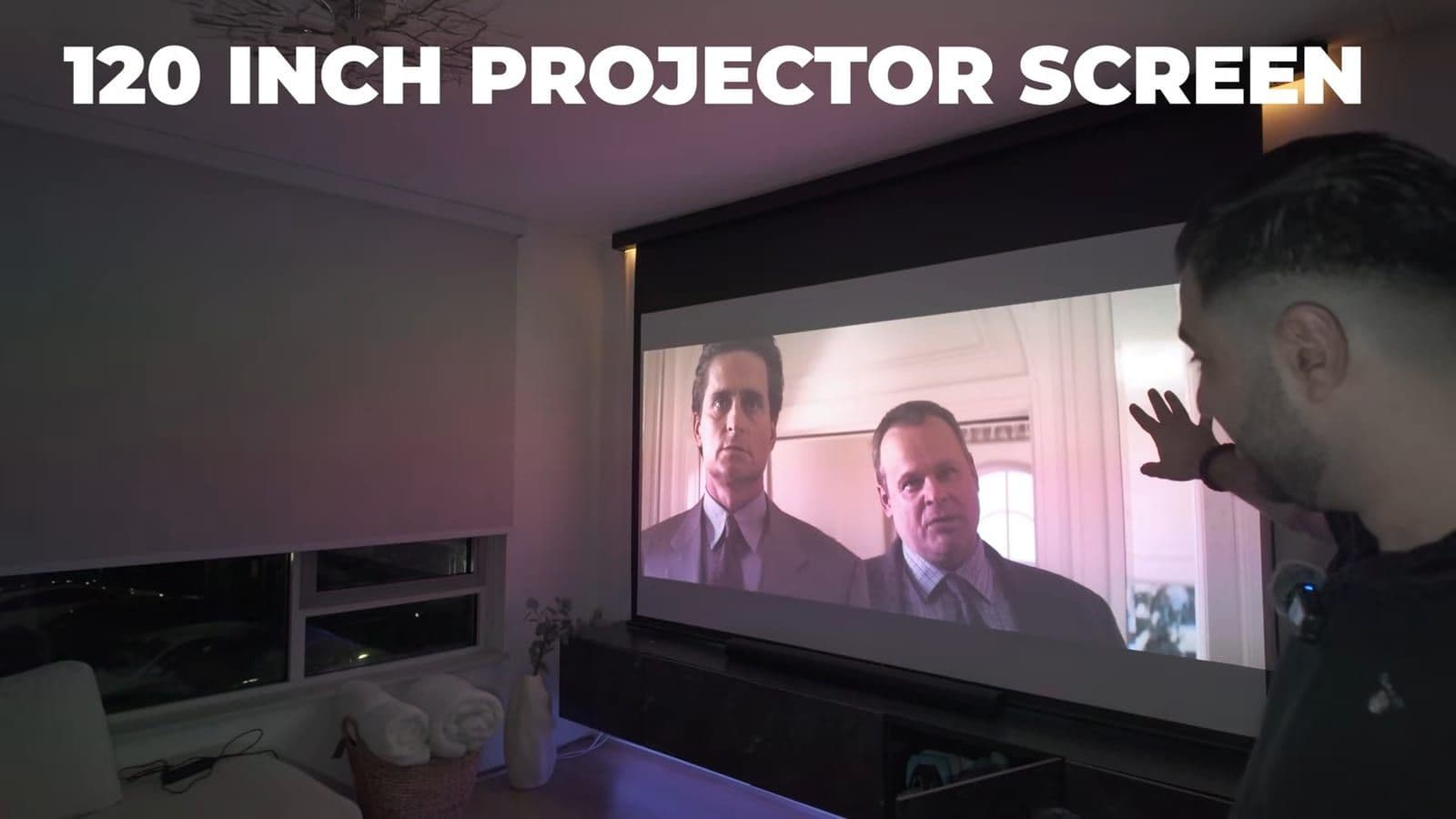
The other major problem is frame pacing. Most streaming dongles output a flat 60 Hz signal regardless of what you watch. Most movies are shot at 23.976 or 24 frames per second. When you force a 24 fps movie into a 60 Hz container, you get micro-stutter during camera pans. Playing a 57 GB file of Basic Instinct on the PlayerPro 8K, the media player automatically syncs the output refresh rate to the exact native framerate of the file. Pans stay silky smooth without introducing artificial soap-opera smoothing.
The XGIMI Horizon 20 Max handles daytime living rooms
Projectors usually require a dedicated, pitch-black room with black velvet walls to produce a punchy image. My living room has massive floor-to-ceiling windows on two sides. With traditional projectors, daytime viewing was basically impossible unless I pulled all the blinds and sat in darkness.
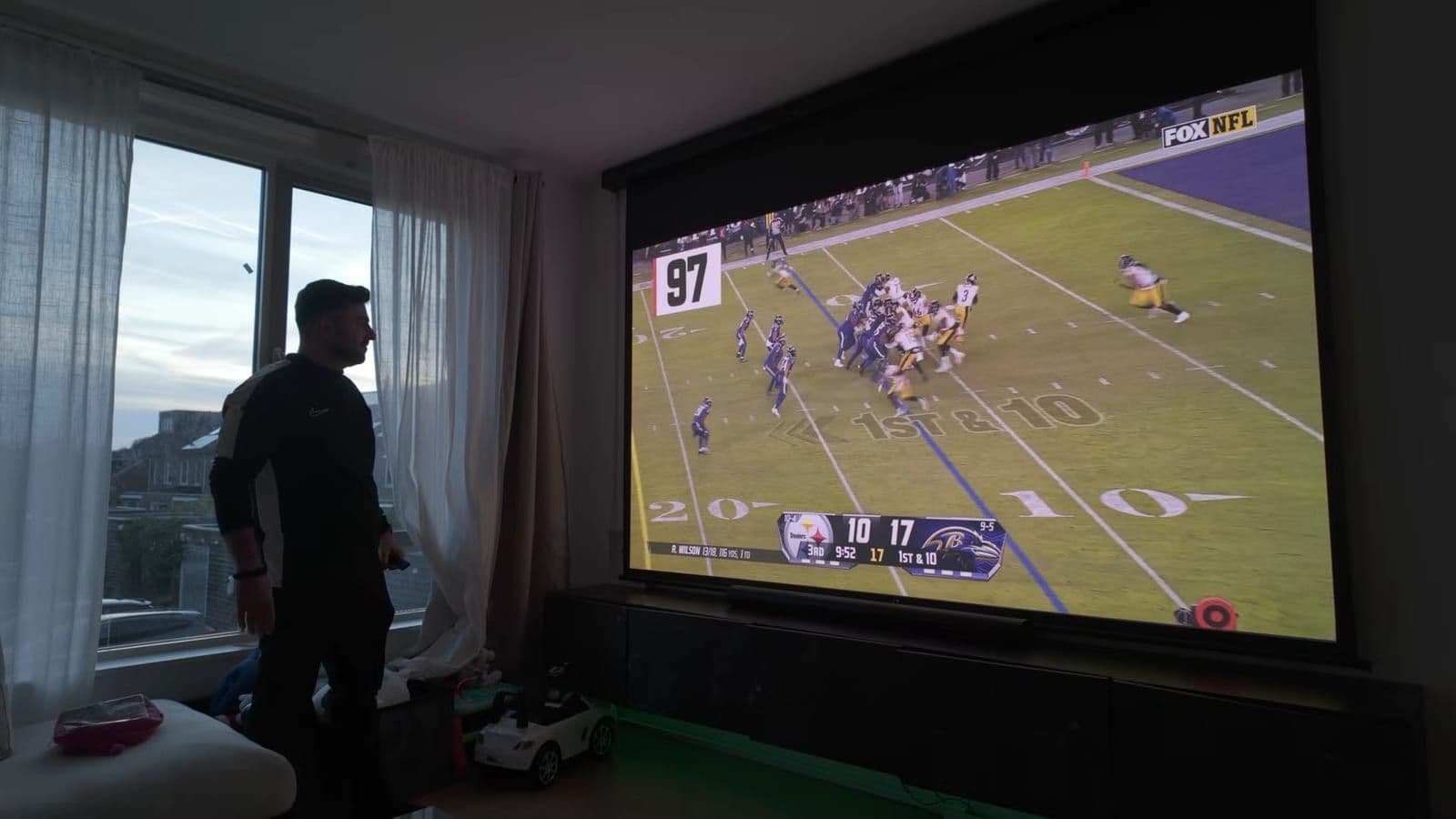
The Horizon 20 MAX produces between 5,600 and 5,700 ISO lumens. On 6 December 2025, it retailed for around €3,000 or $2,399. My previous projector put out 2,300 ISO lumens, so this new unit effectively more than doubles the brightness. In daytime I can actually still use it, and since I have had this projector in place, I find myself using it literally every day.
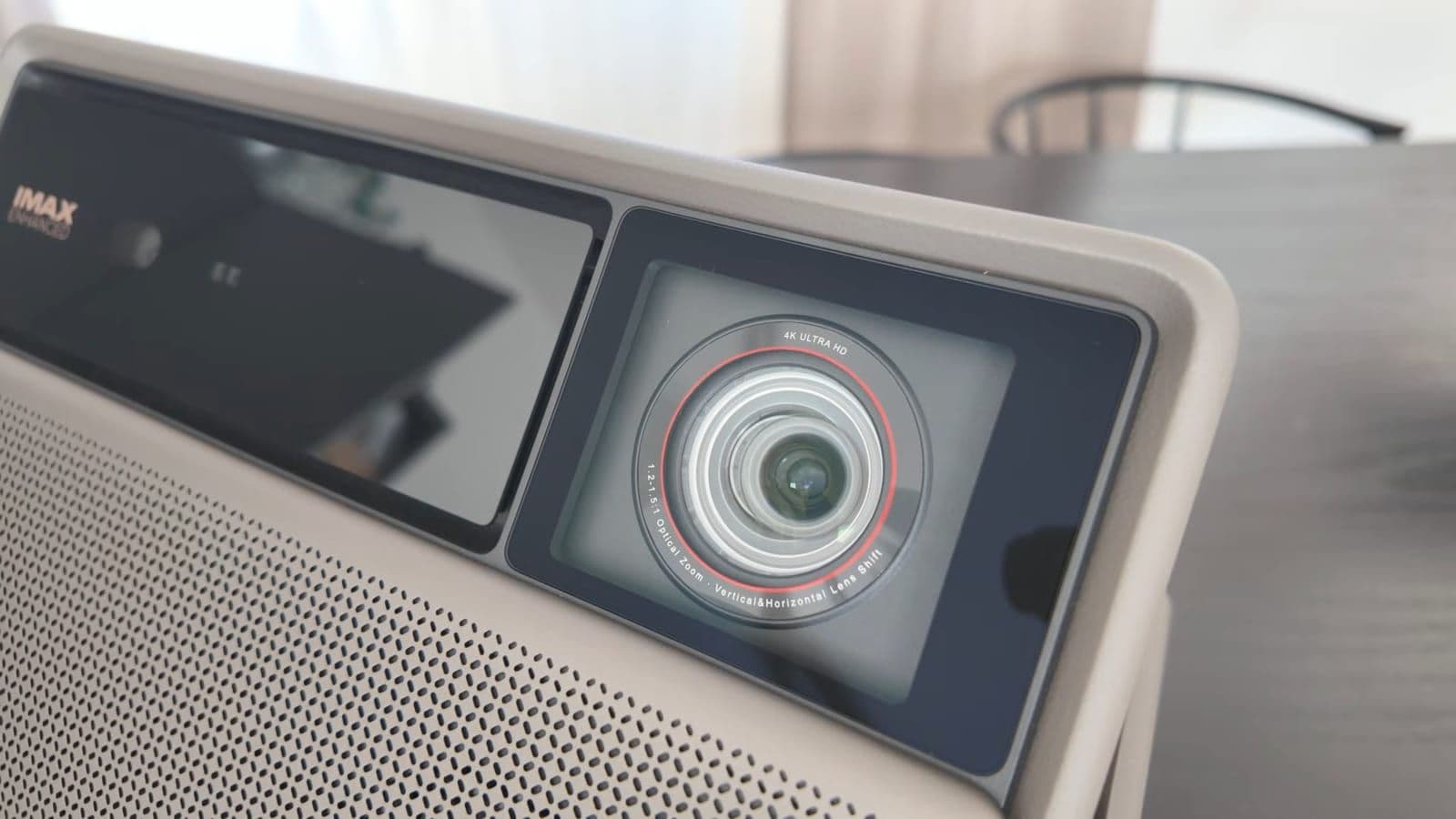
Beyond raw light output, the projector includes optical zoom and motorized lens shift. That allowed me to tuck it away on a high rear shelf without having to use digital keystone correction, which degrades resolution. The integrated Harman Kardon speakers are decent for casual television watching, and the input lag drops as low as 1 ms at 1080p 240Hz, or 3 ms at 4K 60Hz if you hook up a console. If you want to check my standalone impressions of the projector itself, I published a separate XGIMI Horizon 20 MAX review.
The R_VOLUTION PlayerPro 8K is built like high-end audio gear
The R_VOLUTION PlayerPro 8K sits at the center of my media cabinet underneath my PlayStation 5. On 6 December 2025, it was priced around €1,299, going up to €1,500 depending on storage options. Unlike plastic streaming sticks, this is heavy, enthusiast-grade hardware housed in a brushed metal chassis with an integrated digital front clock.
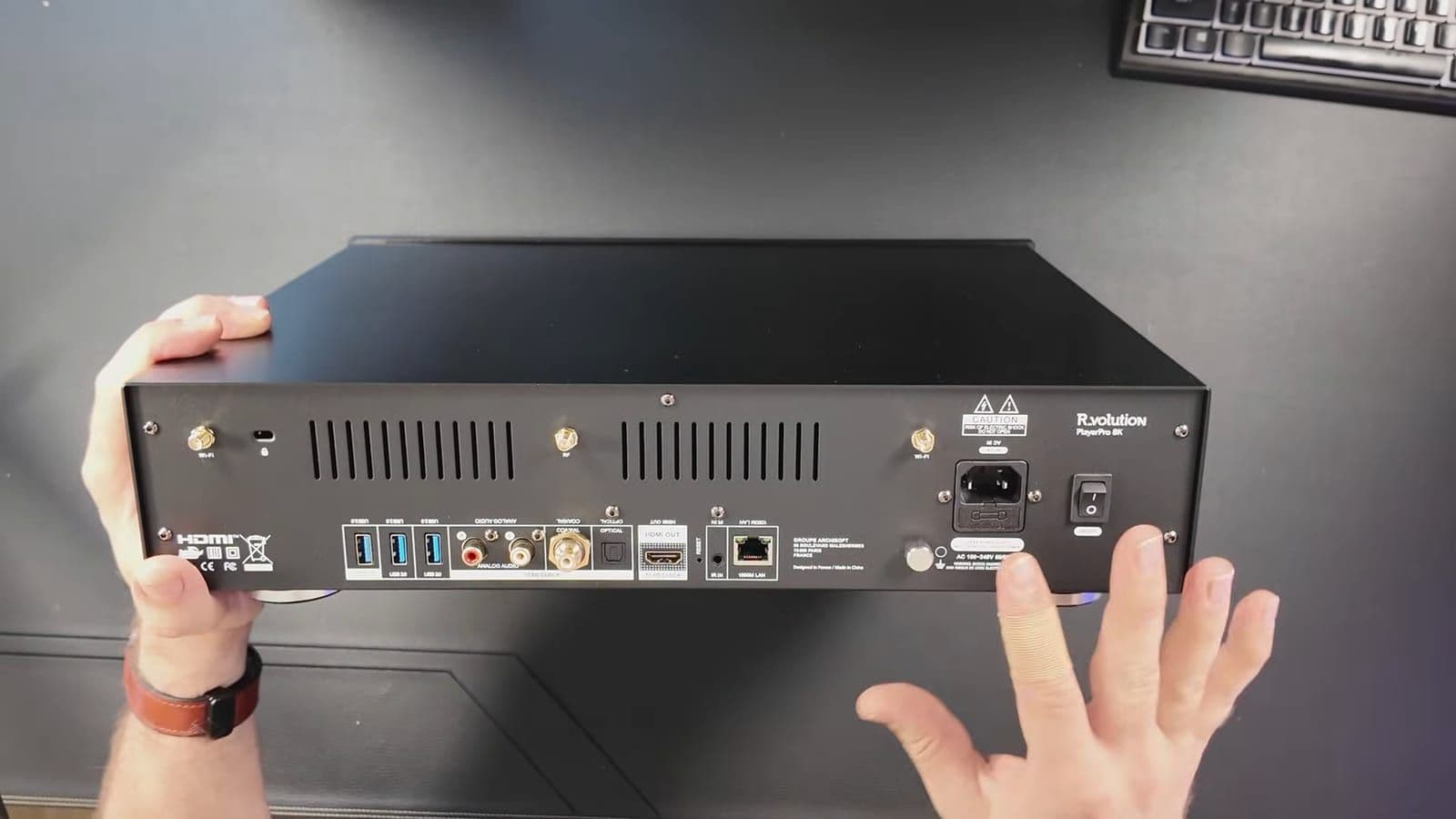
Under the hood, it runs an Amlogic S928X-K/J chipset backed by 8 GB of RAM and 64 GB of onboard storage. The power delivery relies on an internal toroidal transformer linear power supply, and it features a high-precision TCXO audio clock with 0.1 percent accuracy to reduce digital jitter. I also did an in-depth breakdown in my standalone R_VOLUTION PlayerPro 8K review.
What makes it exceptionally useful is the front-loading dual 3.5-inch SATA hard drive bay. You can slide in two hard drives up to 32 TB each, giving you 64 TB of raw storage inside the box. It functions as a local network share. I do not have to unplug drives or walk back and forth with flash drives. I drag and drop movie files wirelessly across my home network straight onto the PlayerPro 8K.
There is one caveat to remember. This device does not have certified Google TV software. If you buy this expecting to log into Netflix or Disney+ directly through its internal operating system, you will be disappointed. It is engineered strictly for local high-bitrate file playback.
Solving the Sonos Arc eARC splitting nightmare
Wiring this setup caused me some serious headaches at first. I wanted to feed video from four different sources, including the PlayerPro 8K and my PS5, to two different displays: my 120-inch projection screen and a secondary television. At the same time, I needed full uncompressed Dolby Atmos sent to my Sonos Arc soundbar.
Projectors rarely handle audio pass-through cleanly, and the Sonos Arc has only a single eARC input. As I noted in the video, I was looking for a solution for that, and there is simply not a lot out there. Most basic HDMI switches cannot separate an eARC audio signal properly without introducing sync lag or handshake drops.
The fix was an 8K eARC HDMI switch and audio extractor from FeinTech. It gives you 4 HDMI inputs, 2 mirrored HDMI outputs, and one dedicated eARC output designed specifically for soundbars. With this box in the chain, switching between inputs happens automatically. The uncompressed Dolby Atmos soundtrack routes straight to the Sonos Arc, while the projector receives the full, pristine 4K or 8K HDR video feed with zero handshaking errors.
Browsing movies with R_video and community scenes
Managing a library of huge remux files is frustrating if you have to scroll through ugly file folders. The PlayerPro 8K uses the R_video interface, which scrapes metadata automatically as soon as you dump a file into storage.
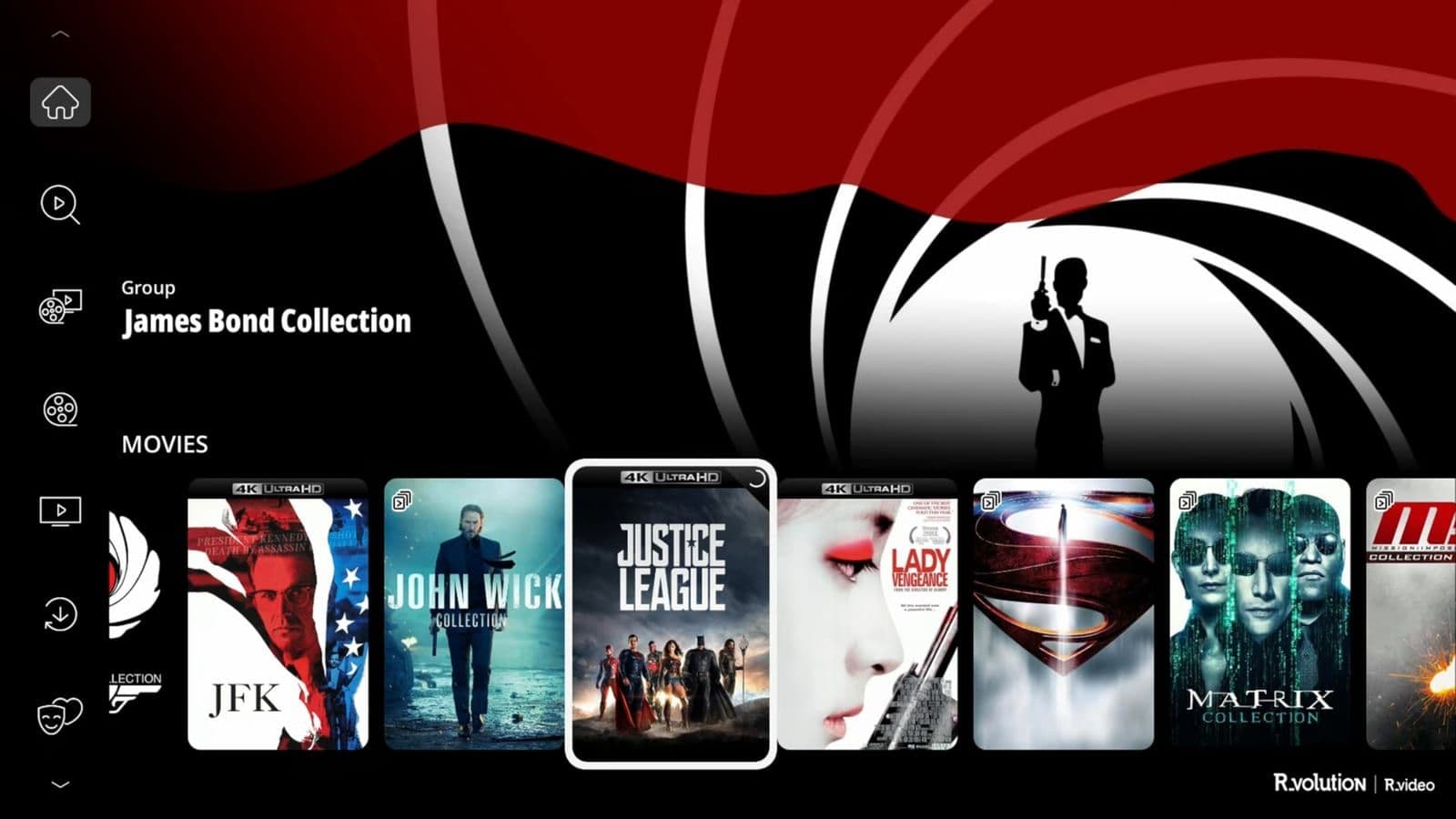
It builds a clean poster wall, categorizes movies into collections, and displays clear badges for Dolby Vision, HDR10, and Dolby Atmos. When you hover over a film like the 1989 Batman, it plays the background movie score and theatrical trailer immediately. Selecting play launches a massive 71 GB file instantaneously without a stutter.
One of the most unique software features is Community Scenes. If you boot up Mission: Impossible, the system pulls in crowdsourced bookmarks. You can instantly jump to famous stunts, iconic shootouts, or reference demo moments without scrubbing through two hours of footage. You can also bookmark your own favorite demo clips to show off your setup to guests.
My only real annoyance with R_video is the companion mobile app. While you can view your library on your phone, you cannot edit artwork or fix misidentified movie posters inside the app. You have to make those adjustments on the big screen using the physical remote control.
Who should buy this setup
This combination is built strictly for movie collectors and home theater enthusiasts who value picture quality over convenience. If you have a sizable collection of 4K Blu-ray remux files, want uncompressed Dolby Atmos audio, and need a projector bright enough to run in a bright living room without blackout shades, this setup delivers a genuine reference experience. The quality difference between this and streaming directly on Netflix is twice as good.
Who should skip it
Skip this if you primarily watch Netflix, Amazon Prime, or YouTube. Spending over €4,000 on a projector and specialized media player makes zero financial sense if your primary source is compressed web streaming. If you do not want to manage hard drives, rip physical discs, or troubleshoot HDMI audio switchers, buy a standard 85-inch television and a streaming box instead.
Veelgestelde vragen
Can the R_VOLUTION PlayerPro 8K stream official Netflix in 4K?
No. The media player is designed as an enthusiast local media streamer and does not have the certified Google TV operating system needed for high-resolution Netflix streaming. For general streaming apps, you should rely on the projector's internal smart platform or a dedicated streaming stick.
How does the XGIMI Horizon 20 Max look in daytime with windows open?
Thanks to its 5,600 to 5,700 ISO lumens brightness, it remains sharp and fully watchable during the day even in a room with multiple large windows. While dark cinematic scenes still look best in dim lighting, everyday television, sports, and bright movies show excellent contrast and punch without closing the curtains.
Why do I need a FeinTech eARC switch between a projector and a Sonos Arc?
Projectors do not always route high-bitrate multichannel audio back down an HDMI cable properly, and the Sonos Arc features only a single eARC port without auxiliary HDMI pass-through inputs. The FeinTech switch intercepts the incoming signal from your media players, splits the video directly to the projector, and routes dedicated uncompressed eARC audio straight to the soundbar.
Get new reviews in your inbox
One email when a new review goes up. No spam, unsubscribe with one click.
Comments0
No comments yet. Be the first.